The story of George W. Bellar is a sweeping account of a man whose 40-year journey in photography left a mark on Kentucky, Tennessee, Texas, and Oklahoma. From local studio owner to corporate demonstrator and industry lecturer, Bellar’s career reflects the evolution of American photography and the mobility of those dedicated to the art.
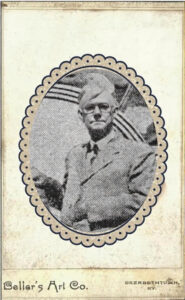 Early Success: Bellar’s Art Co., Elizabethtown, Kentucky (1895–1896)
In September 1895, newspapers in Elizabethtown introduced the Bellar’s Art Co., featuring studio portraits, artistic styles, and cabinet photographs with strong local promotions. Throughout the autumn, advertisements emphasized fine workmanship and competitive pricing. The company’s ambitions quickly expanded; a branch in Buffalo, Kentucky was opened, attested by notices in the LaRue County Herald-News in December.
By January 1896, the Bellar’s Art Co. was offering seasonal discounts and communicating temporary closures for transitions. That same month, records from Leitchfield document “Geo. Bellar” taking over the Kennedy Gallery, marking the first clear connection to George W. Bellar as the operator—a hallmark of the fluidity and reach of traveling photographers in the era.
Moving on: Expansion to Tennessee and Texas (1897–1903)
Within a year, Bellar’s reach had grown. A 1897 personal notice from Tennessee found him working in Humbolt, signifying sustained mobility and work across state lines. By 1902, the narrative shifted dramatically: Bellar became a representative for the Eastman Kodak Company. Announced in the Houston Chronicle and other Texas papers, Bellar gave public demonstrations of photographic equipment and represented Kodak at professional conventions throughout Texas. Here, Bellar transitioned from local operator to technology specialist and industry networker, a role confirmed by his ongoing involvement with the Photographers’ Association of Texas.
Corporate and Professional Prominence (1920s–1933)
Bellar’s later years show continued importance in the photographic industry. In 1930, a convention photograph features him among Dallas cameramen, placing him firmly in professional photographic circles. He remained active as a traveling representative, seen in Oklahoma visiting local studios in 1932. By 1933, he was a noted speaker at the Texas Professional Photographers’ Association convention, representing the Hammer Dry Plate Company—a key supplier in photographic materials—and sharing his extensive expertise with industry peers. His death in October 1933 in Denton County, Texas, was noted in the press, and census records from 1900 (as a photographer in Tennessee) and 1930 (as a photographic salesman in Oklahoma) close the circle on his lifelong career.
Analyzing Bellar’s Legacy, Identity and Continuity
Multiple records—from business notices to census details—point to the same individual: George W. Bellar, Kentucky-born, whose professional identity and geographic movements remain remarkably consistent over four decades. No evidence surfaces suggesting another in the field with the same name.
Career Evolution
Bellar’s transition from local photographer to technical demonstrator and corporate representative mirrors national shifts in photography. His roles at Kodak and later Hammer Dry Plate Company show a professional able to adapt and guide others, contributing to the industry’s modernization.
Geographic Mobility
Bellar’s career path, from rural studios to bustling southern cities and convention halls, typifies the professional networks forming in the photographic trades at the turn of the twentieth century.
Genealogical Conclusion
The cumulative documentation leaves little doubt: George W. Bellar (1867–1933) was a pioneering photographer who rose from modest Kentucky roots to regional prominence as an innovator, teacher, and advocate for photographic technology. His journey underscores the dynamic nature of early photography in America and stands as a testament to the entrepreneurial and artistic spirit that helped shape the industry.
Reprinted from the author’s blog, “Unfolding the Story Genealogy.
Behind this Story
Here is a detailed account of the extensive research conducted for this story, and the sources used to construct the narrative.
- Bellar Art Co. in Elizabethtown, Kentucky (1895–1896)
- Opening Period and Local Advertisements (September–October 1895)
Beginning 6 September 1895, the News-Enterprise of Elizabethtown advertised the Bellar Art Co., highlighting studio portraiture, artistic styles, watercolors, and cabinet photographs.¹ Repeated advertisements throughout September and October detailed large shipments of frames, bold pricing promotions, and assurances of fine workmanship.²
- Late 1895: Holiday Business and Multi-Town Operations
Advertisements from 25 October through 22 November 1895 promoted moulding frames and pre-holiday portrait orders.³
A 29 November 1895 notice urged customers to complete sittings prior to 20 December.⁴
Notices in the LaRue County Herald-News (Hodgenville) in early December confirm a branch gallery in Buffalo, Kentucky—an indicator of the company’s expansion beyond Elizabethtown.⁵ A final 2 January 1896 notice states the Buffalo gallery was well regarded and would remain open through the start of the year.⁶
- January 1896: Transition and Gallery Contracts
A major advertisement on 24 January 1896 announced gallery closures between 1–10 February and discount portrait offers.
In the same issue, “Geo. Bellar” was reported in Leitchfield, Kentucky, contracting to take over the Kennedy Gallery by 10 February.⁷ This is the clearest early record identifying the operator of Bellar Art Co. as George W. Bellar, an itinerant photographer managing multiple galleries.
- Geographic and Professional Expansion (1897–1903)
- Tennessee Activity (1897)
A personal notice in The Jackson Daily Sun on 6 June 1897 describes G.W. Bellar, photographer, visiting Humbolt, Tennessee, demonstrating his continued mobility and multi-state photographic work.⁸
- Texas Professional Demonstrations (1902–1903)
By 1902, Bellar had entered corporate photographic work with the Eastman Kodak Company, a major shift from small-town studio management.
- On 3 October 1902, the Houston Chronicle announced a demonstration by George W. Bellar of the Eastman Kodak Co., showcasing a new developing machine at the Texas Photo Supply Co.⁹
- On 20 March 1903, the Waxahachie Daily Light reported a public demonstration by George Bellar, described as “an expert,” again representing Eastman Kodak.¹⁰
- By 28 September 1903, Bellar appeared in the Fort Worth Star-Telegram as a representative of the Eastman Kodak Company of Rochester, New York, attending the Sixth Annual Convention of the Photographers’ Association of Texas.¹¹
This cluster of 1902–1903 sources proves that George W. Bellar had transitioned from local photographer to recognized regional Kodak representative, engaged with professional associations and photographic technology instruction.
III. Later Career in Texas and Oklahoma (1920s–1933)
- 1930 Convention Photograph
A photograph published 25 March 1930 in the Fort Worth Record-Telegram identifies George W. Bellar of Dallas among professional cameramen posing at a convention.¹² This confirms his presence in Dallas and his continued involvement with professional photographic circles.
- Professional Travel in Oklahoma (1932)
A personal notice from the Ada Evening News dated 16 May 1932 reports George Bellar of Dallas, Texas, visiting the studios of local photographers, Mr. and Mrs. N. B. Stall, on business.¹³ This indicates an ongoing role as a traveling representative or consultant in the photographic industry.
- Texas Professional Photographers’ Convention (1933)
On 15 January 1933, The Austin American announced the “first convention of the Texas Professional Photographers’ Association,” listing George Bellar of the Hammer Dry Plate Company as a scheduled speaker—his topic being *“A Few Suggestions from One Who Knows.”*¹⁴ This ties Bellar to yet another major photographic supplier and marks him as a respected industry expert on photographic plates and process.
- Death of George W. Bellar (1933)
A funeral notice published 3 October 1933 in the Denton Record-Chronicle reports the death of George Bellar, age 67, at the home of his brother Isaac Bellar.¹⁵
This obituary matches the birth year given in the 1900 census (August 1867), firmly identifying this individual as the same man active in the photographic industry from Kentucky to Texas to Oklahoma.
- Supporting Federal Census Evidence
- 1900 U.S. Census, Madison County, Tennessee
- George W. Bellar, born August 1867 in Kentucky
- Occupation: Photographer
- Enumerated as a boarder¹⁶
- 1930 U.S. Census, Oklahoma City, Oklahoma
- George W Bellar, age 62, born Kentucky
- Occupation: Salesman in Photographic Industry
- Enumerated as a lodger¹⁷
This occupational continuity—from photographer to photographic salesman—matches newspaper evidence from 1902–1933.
- Analysis & Correlation (Genealogical Proof Standard)
- Identity Consistency
Across nearly four decades, the following identifiers remain consistent:
- Name: George W. / G.W. Bellar
- Birthplace: Kentucky
- Profession: Always in photography or photographic supply
- Geographic pattern: Kentucky → Tennessee → Texas → Oklahoma → Texas
- Time frame: Active 1895–1933
- Death record (1933) aligns with birth year (1867) and career trajectory
No contradictory evidence suggests more than one individual of this name in the photographic trade.
- Career Evolution
The records demonstrate a clear progression:
- 1895–1896 – Local photographer and gallery operator (Kentucky)
- 1897 – Traveling photographer (Tennessee)
- 1902–1903 – Eastman Kodak Co. representative (Texas)
- 1930s – Industry sales, conventions, and professional presentations (Texas & Oklahoma)
- 1933 – Recognized photographic expert, affiliated with Hammer Dry Plate Co.
- Geographic Mobility
Bellar’s movement mirrors typical early professional photographers whose careers tracked:
- Rural portrait studio markets
- The rise of Kodak technology
- The expansion of photographic supply companies
- Professional photography associations forming across the South and Southwest
- Genealogical Conclusion
The cumulative evidence provides strong, coherent proof that:
- George W. Bellar (1867–1933)
was a Kentucky-born photographer who began as proprietor of the Bellar Art Co. in the 1890s, later becoming a regional photographic demonstrator, corporate representative, and industry lecturer across Tennessee, Texas, and Oklahoma. - His death in 1933 in Denton County, Texas, closes a nearly 40-year documented photographic career.
- Citations
*Note all newspaper information was sourced from newspapers.com
- The News-Enterprise (Elizabethtown, KY), 6 Sep 1895, p. 8.
- Ibid., 20 Sep 1895, p. 8; 27 Sep 1895, p. 8; 4 Oct 1895, p. 7; 11 Oct 1895, p. 7; 18 Oct 1895, p. 7.
- Ibid., 25 Oct 1895, p. 7; 1 Nov 1895, p. 7; 15 Nov 1895, p. 7; 22 Nov 1895, p. 7.
- Ibid., 29 Nov 1895, p. 7.
- LaRue County Herald-News (Hodgenville, KY), 5 Dec 1895, p. 3; 12 Dec 1895, p. 3.
- Ibid., 2 Jan 1896, p. 3.
- The News-Enterprise (Elizabethtown, KY), 24 Jan 1896, pp. 2, 7.
- Jackson Daily Sun (Jackson, TN), 6 Jun 1897, p. 5.
- Houston Chronicle (Houston, TX), 3 Oct 1902, p. 2.
- Waxahachie Daily Light (Waxahachie, TX), 20 Mar 1903, p. 1.
- Fort Worth Star-Telegram (Fort Worth, TX), 28 Sep 1903, p. 8.
- Fort Worth Record-Telegram (Fort Worth, TX), 25 Mar 1930, p. 9.
- Ada Evening News (Ada, OK), 16 May 1932, p. 3.
- Austin American (Austin, TX), 15 Jan 1933, p. 12.
- Denton Record-Chronicle (Denton, TX), 3 Oct 1933, p. 5.
- 1900 U.S. census, Madison Co., TN, ED 105, sheet 1-A, dwelling 1, family 1, George W. Bellar.
- 1930 U.S. census, Oklahoma Co., OK, ED 105-115, sheet 2A, family 15, George W. Bellar.